Category: Hospice News
Dementia Action Week at St Barnabas Hospice
Dementia Action Week is an active, national campaign running from Monday 13th May to Sunday 19th May.
The purpose of the week is to raise awareness of Dementia and the services and care that are available for patients and their families.
What is Dementia?
Dementia is not a specific disease but a general term for the loss of memory, language, problem-solving skills and decision-making*. Interfering with daily life and everyday activities, Dementia refers to the ongoing decline of brain functioning and is the seventh leading cause of death**.
Alzheimer’s disease is the most common cause of Dementia, but other causes include vascular disease and Lewy body disease – which gradually develop over many years. Dementia is progressive, which means symptoms may be relatively mild initially, and worsen over time***.
Dementia in Lincolnshire
Dementia effects over 12,000 people in Lincolnshire, with a higher proportion of people living with Dementia in the county, than the UK average.
Director of Patient Care at St Barnabas Hospice, Becky Franks, speaks on the importance of this week: “Dementia Action Week is important to help raise awareness of the rise in the number of people living with dementia – this is estimated to be over one million people in the UK by 2025.
“Therefore, almost all of us will know someone living with dementia, and they and their families may well benefit from the advice and support our specialist dementia nurse service can offer them.
“As the patient numbers rise so will the demand for services such as ours, and at St Barnabas we continue to charitably fund this service for Lincolnshire.”
Dementia Support at St Barnabas
St Barnabas offers a Dementia support service for the people of Lincolnshire through our Specialist Dementia Nurses. Working in partnership with Dementia UK, the Hospice offer this essential service for Dementia patients and their families.
Since the service began in the middle of 2019, it has supported 1,230 families in Lincolnshire, and has provided 1,665 hours of face-to-face clinical contact and 1,708 hours of support over the phone.
Tom Rose, Admiral Nurse Clinical Lead, supports Becky’s sentiment: “Dementia Action Week is an important opportunity to do just that. Awareness is better than it used to be, but there is still a long way to go. Whether it’s accessing a timely diagnosis, adjusting to a life altering diagnosis, dealing with changes to health, finances, and relationships or contemplating a very different future, people and families living with Dementia often face a very uncertain and ever shifting situation. But there are lots of things we can do.
“Whether its supporting Dementia Friendly Communities so that people are not excluded because of a diagnosis, improving training for health and social care professionals so that Dementia is not a barrier to care, or ensuring that those living with Dementia are able to have a choice about what their end of life care may look like, there is something that we can all do to improve the lives of those effected.
“I lead the specialist Admiral Nurse service at St Barnabas and our aim is to help the whole family affected by Dementia. Helping them find stability in uncertain times, providing expert clinical support, and advocating for them on the local and national stage.”
At St Barnabas Hospice, specialist Dementia Nurses, like Tom, work together with families to provide the one- to-one support, expert guidance and practical solutions they need to live more positively with Dementia each and every day.
To find out more about Dementia Support Services, please visit the St Barnabas Hospice website.
Resources
*Dementia UK – https://www.dementiauk.org/information-and-support/about-dementia/
**World Health Organisation – https://www.who.int/news-room/fact-sheets/detail/dementia
***Alzheimer’s Society – https://www.alzheimers.org.uk/blog/difference-between-dementia-alzheimers-disease
St Barnabas Hospice supports Dying Matters Awareness Week
Dying Matters Awareness Week is currently running from 6th – 12th May. The purpose of the week is to encourage people to have conversations and start talking about death and dying.
To start the conversation, St Barnabas Hospice’s Head of Wellbeing, Mandy Irons, answers five important questions on the topic of this year’s Dying Matters Awareness Week theme of ‘The way we talk about Dying Matters’.
- Why is it important to recognise national weeks like ‘Dying Matters’ week?
Recognising national weeks like Dying Matters Week, helps to tackle the stigma about death and dying. We completely understand why people find it difficult to start conversations about such an emotive subject, but talking about death and dying won’t make it happen. Instead, it helps us to focus on how we want to live and can help people make important end-of-life decisions, cope with grief and loss, and find meaning and comfort in the face of mortality.
- Why do people often find it difficult to talk about death and dying?
Talking about death can be difficult for several reasons: Death is often associated with fear and uncertainty. Many people fear the unknown aspects of death, including what happens after we die or what it feels like to die. Death can also bring up intense emotions, such as grief, sadness, and loss which can all be difficult to process.
People may have had traumatic or difficult experiences related to death, such as the loss of a loved one or witnessing a death firsthand. These experiences can make talking about death difficult, especially when talking about death and dying can be taboo. Talking about death can also raise existential questions about the meaning of life, the nature of existence, and one’s own mortality. These questions can be unsettling and uncomfortable to contemplate.
- How can we start to break the taboo that surrounds words like death and dying?
Getting involved with awareness weeks like Dying Matter Week is a great place to start. Try and encourage open and honest conversations about death and dying in everyday life. This can involve talking with family members, friends, and colleagues about your wishes for end-of-life care, discussing experiences of grief and loss, and sharing personal beliefs and values related to death.
At St Barnabas we believe in creating safe and supportive spaces where people feel comfortable to discuss death and dying without judgement or stigma. Healthcare professionals play a crucial role in supporting conversations about death and dying. Talking about advance care planning, palliative care, and end-of-life preferences with patients and families helps to reduce fears and worries.
Share your own experiences, thoughts, and feelings openly, and encourage others to do the same. Together we can normalize discussions about death and create a culture of openness and acceptance.
To find out more about our wellbeing services, including one to one counselling, bereavement support, drop in coffee mornings and creative groups, click here.
- Why it is important for individuals to talk about death and dying?
Discussing your wishes at end of life help you to make informed decisions about your medical care and treatment preferences in advance. This includes decisions about life-sustaining treatments, resuscitation, organ donation and where you want to die. By communicating these preferences with loved ones and healthcare providers, you can ensure that your wishes are respected and followed.
Discussing death also allows you to address practical matters such as estate planning, wills, and funeral arrangements. By getting your affairs in order, you can focus on living and also relieve your loved ones of the burden of making these decisions during a time of grief.
We run regular free events in our wellbeing centres and in the community where you can meet with a legal professional to gain guidance on making your Will.
Find out more about our Free Will Cafés.
- Can talking about death and dying be useful for individuals struggling with grief?
Talking about death can help individuals and their loved ones better prepare for and cope with grief and bereavement. By discussing feelings, memories, and experiences related to death, individuals can find support and validation from others who are also grieving and maintain a connection to a loved one who has died. Silence and secrecy promote fear and uncertainty – being open reduces those fears and helps death become a part of life.
Mandy Irons closes with: “I find a great way to open up a general conversation about death is to start with discussing what you would like for your funeral song.
“It is often something people have thought about and is a gentle way to help approach more difficult areas of the conversation, including more of your loved ones’ wishes.
“To access support and find out more about our services, please visit the St Barnabas Hospice website”.
St Barnabas Hospice pay tribute to Samantha Davis
The team at St Barnabas Hospice are deeply saddened to hear of the passing of Samantha Davis, wife of our patron, Warwick, and co-founder of dwarfism charity, Little People UK.
Samantha ‘Sammy’ and Warwick have become part of the St Barnabas family over the last seven years. Since opening our Grantham Hospice in the Hospital in 2017, they have been supporting our work in delivering free, high quality, compassionate end-of-life care and support to patients, families, and carers. Sammy supported Warwick with all his visits to St Barnabas, including our Ironwork appeals, HeART Trail and most recently an interview at our Inpatient Unit in Lincoln, where they met with patients and staff.
Dedicated to charity work, Sammy was a generous, passionate, and warm person who brought a smile wherever she went. She will be dearly missed, and we offer our heartfelt condolences to Warwick, their children and all the family at this difficult time.
(Photo: Samantha Davis and Warwick Davis; The St Barnabas Dragonfly Appeal at Doddington Hall and Gardens. Photo Credit; Rachel London Photography)
St Barnabas Hospice and East Midlands Ambulance Service support local Scouts community group with first aid training
St Barnabas Hospice joined forces with East Midlands Ambulance Service (EMAS) to provide educational and interactive first aid training to local community group, 27th Lincoln Scouts Squirrels and Cubs.
Attendees of the training are all members of The Scout Association, including young people from both the Squirrels programme for 4- to 6-year-olds and the Cubs programme for 8-to 10-year-olds.
The basic first aid training was delivered to the young people by members of the St Barnabas education department and volunteers from EMAS. The training mainly included encouraging the young people to take part in interactive and engaging activities and the use of wound moulage, to replicate some medical conditions.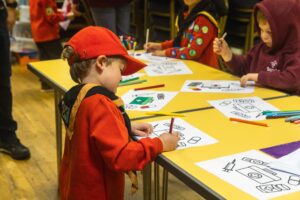
Richard Hunter, Divisional Senior Manager for EMAS, comments on the partnership and what other activities the session involved: “EMAS were delighted to team up with St Barnabas Hospice and the 27th Lincoln Scouts Squirrels and Cubs to provide a valuable and fun basic first aid session for young members.
“This interactive session helped show what EMAS do, taught young people when and how to call for help and showed them how to deal with basic first aid emergencies.
“This was a lovely opportunity to show how EMAS value working with the community and there were certainly several young paramedics of the future identified in the group!”
St Barnabas Hospice are proud of the charity’s developing education department and available resources to train and educate members of the local community.
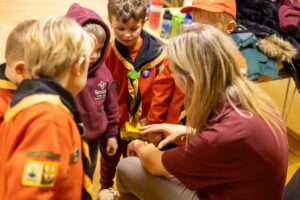 Rebekah Gore, Education and Project Lead at St Barnabas and Squirrels volunteer, says: “St Barnabas Hospice community partnership with 27th Lincoln Scouts Squirrels and Cubs, not only equipped these young minds with essential knowledge but also helped them to foster a sense of empathy and develop lifesaving skills and knowledge on how to call for help, whilst keeping themselves safe.
“St Barnabas Hospice are passionate about providing gold standard, engaging and meaningful education to benefit individuals and communities.”
Ray Twell – 27th Lincoln Scouts Leader also commented: “The balanced programme we offer and deliver weekly is designed to not only give fun and adventure but to help young people develop skills for life. The session run for us by St Barnabas Hospice not only did all of that, but could save a life in the future!
“The interactive training session was very engaging, and the leader team witnessed some real enthusiasm. All of this saw the young people earn an Emergency Aid Badge.
“Thank you for giving your time and experience to help our Scout Group”.
St Barnabas Hospice would like to give thanks to East Midlands Ambulance Service and 27th Lincoln Scouts Squirrels and Cubs.
To find out more about St Barnabas and the care and support they provide to over 12,000 people and families across Lincolnshire every year, please visit: https://stbarnabashospice.co.uk/
St Barnabas Hospice announced as Lincoln City Football Club charity partners
St Barnabas Hospice are delighted to have been voted as a Charity Partner of Lincoln City Football Club 2024.
Following a supporter vote and a very close result, St Barnabas Hospice have been named as one of two charity partners of Lincoln City Football Club for the 2024 season.
The vote was extremely close with the club receiving thousands of votes from supporters who voted online on the LCFC website between 18th December and 3rd January. The supporters’ decision means that St Barnabas will now be working closely with the football club, alongside other charity partners Marie Curie Lincolnshire, Lincoln City Foundation and Samaritans.
Liam Scully, CEO of Lincoln City FC says: “At the heart of compassion, St Barnabas Hospice embodies the unwavering commitment to provide solace and support to those navigating life’s most challenging moments.
“We stand proud in our partnership with St Barnabas, applauding the profound impact of their compassionate care in our local community and we look forward to promoting their good work across the year.”
Lincoln City FC charity partners are allocated main priority for fundraising support and profile awareness supported by the club throughout the year, in the hope to raise more important funds for their causes.
During the season, staff at the club are committed towards helping these charities with fundraising activities, all designed to raise the profile of the charity.
Collaborative fundraising activities between LCFC and St Barnabas can vary throughout the year, including priority to carry out matchday bucket collections and benefit from player appearances.
Caroline Swindin, Head of Fundraising and Lottery at St Barnabas said: “I am thrilled that we have managed to secure such a wonderful charity partnership with Lincoln City Football Club. This partnership means so much to us in terms of helping to raise our profile in the local community. It will allow us to support more people, and their families, across Lincolnshire living with a life-limiting or terminal illness.
“From the bottom of my heart and everyone at St Barnabas, we want to say a huge thank you to all who nominated and voted for us during this process. The support we have received from individuals and local businesses throughout Lincolnshire has been outstanding.”
To find out more about how your business can support St Barnabas Hospice, email caroline.swindin@stbarnabashospice.co.uk
Free Will Cafes 2025
Every day, St Barnabas Hospice are privileged to see the impact that legacy donors make on the services we provide to the people of Lincolnshire. These remarkable gifts help us expand our services, set up new initiatives and support our staff. But there is always so much more that we would like to do.
In light of this, we are continuing to offer Free Will Cafés across Lincolnshire. These are regular, free events providing virtual and face-to-face support.
The Cafés will provide you with the chance to meet with a legal professional, receive advice and take guided steps towards making your Will. Representatives from St Barnabas will also be available throughout the sessions for you to talk to.
Wednesday 1st October – Lincoln, Cardinal Close
Thursday 9th October – Louth Wellbeing Centre
Thursday 6th November – Grantham Wellbeing Centre
Wednesday 29th October – Boston Wellbeing Centre
Thursday 23rd October – Welton Methodist Church
Tuesday 4th November – Wragby, Hansard Hive
If you would like to receive further information about writing a will with our service, please contact Ellie Carter, Legacy advisor at St Barnabas on ‘legacy@stbarnabashospice.co.uk’ or 01522 540 300.
Please note: When making a simple Will, the service is provided for free. If you have more complex circumstances, there will be a small charge for making your Will, however, this is at a reduced rate.
This year’s Christmas message from our CEO, Chris Wheway
This December, I would like to say a big thank you to all of those who have supported us throughout the year and wish you a very, happy Christmas.
Thank you to the companies who have supported us with time and money, our staff, and our volunteers. Thank you also, to all the people who have been into our shops to donate and spend money with us. Without all of your support, we couldn’t continue to provide care to over 12,000 people and their families across Lincolnshire, every year.
This year has been an exciting one for the Hospice, including the celebration of our 40 years of service with our 40 Faces of Hospice Care, the HeART Trail, our biggest fundraiser to date, the launch of our Free Will Cafes and the restoration of our Wellbeing Centres.
As well as reflecting, we are also looking forward to next year and what we have to come, including our upcoming Ironworks display and Spring forward appeal.
Please remember to share a Christmas memory of your loved one this year through Much Loved, a new addition to ways we offer for you to organise a dedication to your loved one: https://sbh.memorypage.org/christmas-memory
I know Christmas is a challenging time for many and a time where things like grief are amplified. I hope and pray that you all have a peaceful and blessed Christmas and thank you once again for your support.
Eleven ways to cope at Christmas following a bereavement
St Barnabas Hospice has put together a helpful guide for those coping with a bereavement this Christmas.
Here at St Barnabas Hospice, we know that Christmas can be an especially difficult time for those going through a bereavement. Whether this is your first Christmas after a bereavement, or you were bereaved some time ago, the Hospice has provided twelve helpful ways to cope this year.
Mandy Irons, Head of Wellbeing at St Barnabas, said: “We understand how painful this time of year can be and would like to share our tips for coping with bereavement at Christmas. We provide free, local support throughout the year for all adults in the community who may be struggling with a bereavement, regardless of whether they have accessed our services or not.
The St Barnabas Wellbeing team are here to provide free support to people coping with a bereavement across Lincolnshire, regardless of whether their loved one received hospice care or not. To refer yourself to this service, call 0300 303 1897. For this Christmas period, this line is open from Wednesday the 27th to Friday the 29th, 11am – 3pm. Our service will then return to our normal hours of Monday to Friday – 11am to 3pm, from the 2nd January.
If you are in need of bereavement support outside of those hours, please use these services:
- Lincolnshire Mental Health Hub 0800 001 4331
- Samaritans 116 123
- https://www.thegoodgrieftrust.org/
The St Barnabas tips for coping with bereavement at Christmas are:
Tips for Coping with Grief at Christmas and New Year
- Acknowledge that the holidays will be different, and they may be tough.
- Include the person in some way – perhaps light a candle or raise a toast. In collaboration with the in-memory website Much Loved, we invite you to share a Christmas memory of your loved one this festive season. You will have the opportunity to dedicate a message and image as part of your story. To do so, please visit https://sbh.memorypage.org/christmas-memory
- Decide which traditions you want to keep and which you want to change. Think about creating a new tradition in memory of your loved one.
- Be honest. Tell people what you DO want to do and what you DON’T want to do and spend time with people who support you with this.
- Decide where you want to spend Christmas. Remember that the way others will want to spend the holiday may not match how you want to spend it. We all grieve differently and that’s ok.
- Don’t feel guilty: about declining invitations or skipping events, it may just feel too much; if you have not sent cards this year. Writing a card without a loved one can be difficult; if you skip or minimise the decorations.
- Ignore the people that tell you what you “should” be doing. Listen to yourself, trust yourself, communicate with your family and do what feels right for you.
- Practice self care: Watch your food intake. Food can make you feel better in the short term but don’t allow it to become your Christmas comfort; Alcohol can heighten emotions and may raise anxiety levels so be careful how much you consume; Go for a walk; Take time out to yourself if you need too.
- Ask for and accept help. There will be people who want to help and may offer their support. Take them up on their offers. If people aren’t offering, ask. It can be a relief for you and the person who you have asked for help.
- Enjoy yourself! The holidays will be tough, but there will also be love and joy.
- Remember, it is okay to be happy – this doesn’t diminish how much you love and miss the person who isn’t there this Christmas. Don’t feel guilty for the joy you do find this holiday season
Roythornes Solicitors choses St Barnabas Hospice as ‘Charity of the Year’
We are pleased that Roythornes Solicitors have chosen our Hospice to be their Charity of the Year.
Roythornes Solicitors is a national law firm with five strategically located offices across the Midlands and East Anglia. The company is now focusing their fundraising efforts, with the help of our Hospice, to help raise vital funds to help support the brilliant work our clinicians do each and every day across Lincolnshire.
Recently, members of staff from Roythornes’ Spalding office supported our Lottery team with promoting the St Barnabas, which has been running for 27 years, and helps to raise vital funds for local hospice care.
Sara Wilkinson, Chairperson of Events Team at Roythornes Solicitors said: “We know how much St Barnabas relies on lottery sales, so we thought this would be a brilliant use of some of our CSR hours to deliver literature about it to the houses around our head office, especially as we know they haven’t previously had the chance to cover the Pinchbeck area.
“The team had a great time; it was a great way to get some fresh air, steps in, and start the day off right!”
Caroline Swindin, Head of Fundraising & Lottery of the charity said: “It’s such good news when a business chooses us as their Charity of The Year and having Roythornes on board is a great boost to help us raise awareness of our diverse range of care and support and our fundraising efforts.
“We have many valued supporters, but we always need more help as the pressures on the services we provide are constantly increasing. We’re looking forward to an exciting year working together with Roythornes.”
St Barnabas Hospice supports young professionals studying at Lincoln Medical School
St Barnabas Hospice are celebrating the teaching and experience they provide to medicine students studying at local education provider, Lincoln Medical School.
As part of the charity’s developing education department and available resources to educate young professionals, the Hospice is celebrating the work they do with local medicine students and their ongoing partnership with Lincoln Medical School, since its opening in 2018.
From January to September every year, each medicine student is provided with a one-week placement at St Barnabas, sitting in varying departments across the organisation. This experience, provided by the charity, forms part of the students’ studies to qualify as a practicing doctors.
Sarah Christoper, Head of Education Governance at St Barnabas Hospice says: “St Barnabas work to give students a really fantastic placement experience.
“We have a designated Placement Lead and multiple members of staff who coordinate students, ensure their placement experience runs smoothly and is something really special”.
All clinical staff at St Barnabas undertake practice supervisor education. This is regularly updated by both the University of Lincoln and St Barnabas to ensure Hospice staff have the skills to educate and support the students.
Sarah continues: “Palliative and end of life care at St Barnabas is largely focused on delivering person-centred care with an emphasis on spiritual and psychological care as well as symptom management.
“Students have the opportunity to gain a real insight into this area of medicine. A huge part of palliative and end of life care is advanced communication and students have a chance to begin to hone their communication strategies in challenging circumstances.”
Harriet Francis, a medicine student at Lincoln Medical School details her placement role: “Our work here at St Barnabas has involved ward rounds, advanced care planning, admissions, discharges and seeing the work they do within the hospital for palliative care”.
Zainah Sindhoo, a medicine student at Lincoln Medical School says: “The part I enjoyed the most about working at St Barnabas is the community and environment that the charity creates, which is very supportive and uplifting.
“Seeing how everyone works in a team and works with patients is something I really enjoyed, alongside being a part of the spirit that St Barnabas brings to the care they provide.”
Dr Carina Bristow and Dr Adam Brown are two of the members of staff dedicated to planning and providing education for the medical students.
Dr Brown says: “Having the students here is really enjoyable and they form a big part of my personal interest in teaching and education.
“I think it’s really important that we provide a good placement for them so they can gain more experience in what palliative care is and improve their ability to work in this field in the future.”
St Barnabas Hospice are proud to continue to support part of the education and training of Lincoln Medical School students in the field of hospice care.
Sarah Christopher says: “It is wonderful that due to the placement experience we are able to provide at St Barnabas, some of the students may choose to work in this area of medicine when they qualify.
“No matter what area of medicine they choose in the future, hospice care is a fundamental principle that is often forgotten. Caring for people at end of life is a humbling experience.”
To find out more about St Barnabas and the care and support they provide to over 12,000 people and families across Lincolnshire every year, please visit: https://stbarnabashospice.co.uk/.